
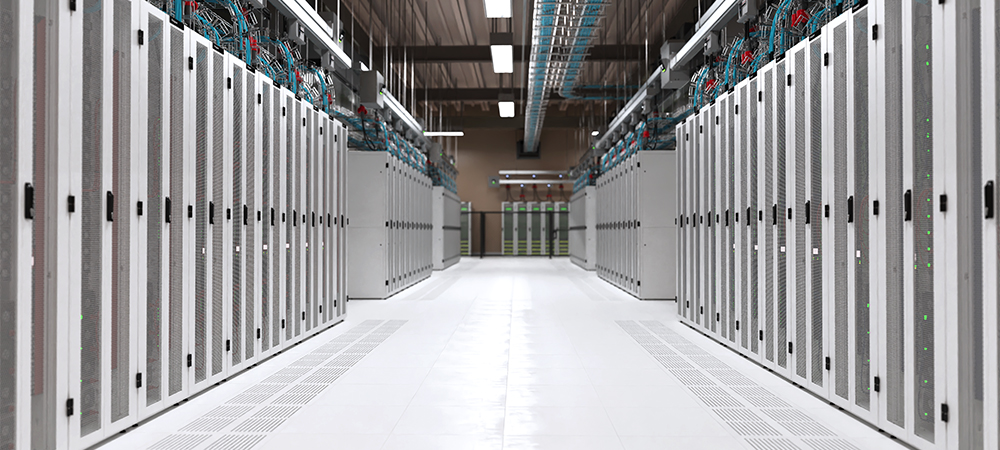
In the race to build faster and denser data centres, a critical risk continues to lurk in the background – arc flash. As power densities rise, so does the cost of complacency if data centres do not update their arc flash risk management strategies. In this interview, Chris Osian, Product Manager at Starline, a brand of Legrand, provides his expert perspective on the importance of educating organisations and their employees to manage risk, particularly as rising power demands driven by AI workloads are expected to increase.

As AI and high-performance computing (HPC) drive ever-higher data centre power densities, the magnitude and severity of potential arc flash incidents increases significantly. To mitigate these risks, operators must implement multiple strategies, including safer power distribution design, arc flash hazard studies, ensuring proper use of personal protective equipment (PPE), utilising overcurrent protection devices (OCPDs) such as fuses, and deploying new technologies like remote plug-in actuators, live temperature monitoring and infrared (IR) scanning. Used together, these strategies collectively enhance safety in high-density environments.
Data centre owners have a responsibility to provide technicians, electricians and other employees with the safest work environment possible. To this end, we explore how forward-thinking operators can reduce the dangers of arc flash incidents before they become a headline.
Can you tell us what an arc flash incident looks like in practice and the impact from a safety perspective?
An arc flash is, at its worst, an electrical explosion. It’s when energy jumps from one conductor to another. In some cases, it can be as big as an intense blast of light and heat and in others as little as a spark running from an outlet to the plug.
In the data centre, arc flash incidents can happen because of a mis-wire at the factory. The faulty component gets out to the field, powered on and a spark occurs. They can also happen when there’s a lack of routine maintenance taking place and hotspots aren’t caught in time. That can cause some material to degrade and have the energy jump again through an air gap, creating an arc flash incident.
As power driven by AI workloads is increasing, safety is paramount and requires a more targeted focus. Where there’s increased power demand, there’s increased incident energy, or arc flash energy, and ultimately more risk involved when dealing with electrical equipment.
Arc flash incidents can occur in data centres; however, they’re rare as long as the data centre has good practices and programmes to prevent them.
How much of a comprehensive understanding do data centre organisations have about the causes and risks of arc flash incidents?
There’s a good level of comprehension in the data centre industry. Arc flash risk when working with electrical equipment has been around for some time now, so there’s a good understanding of keeping personnel safe.
Referring back to rising power and the continued growth of power-hungry demands for AI, employers and data centres will begin to pay a lot more attention to when and how they carry out energised work.
Standards and education resources are widely available. I believe we’ll see data centre organisations investing more time in safe practices, especially with the current AI trend.
What are some of the key mitigation strategies used to prevent an arc flash incident from occurring?
First and foremost is understanding and education. Arc flash hazard studies are another option, carried out by third parties. These studies provide information about the type of arc flash energy at each point in the electrical system and identify the type of protective equipment required. The study will essentially educate the workforce to understand the risk involved when dealing with electrical systems and help them prevent injury.
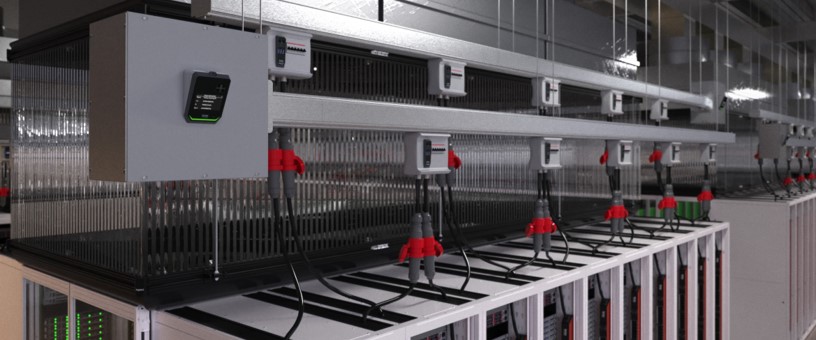
Another component to help mitigate risk is regular maintenance, including IR scanning. IR scanning enables the early identification of hotspots or anomalies if done often. Regular maintenance and ensuring your infrastructure is in good health is key to avoiding anomalies and downtime.
An additional strategy involves identifying anomalies within the building management system. A lot of data centres use building management systems to trend current, but there are also environmental sensors out there – for instance, thermal sensors.
With busway systems, you can detect alarms within the end feed – whether it’s exceeding a certain thermal limit or if there’s a high load that triggers an alarm.
How can data centre owners provide their employees with the safest work environment possible and reduce the dangers of arc flash incidents?
Providing employees with the knowledge required is of utmost importance. You can’t put anyone into an electrical work environment – especially these high power situations – and expect them to know how to deal with the risk.
You must educate your clients, your customers, your personnel and everyone that comes within close proximity to electrical equipment. They need to know what they’re working with and have an in-depth understanding of potential hazards. They also need to be aware of how to manage risk when working on the equipment.
Can you outline some of the safety advantages of electrical busway systems compared to legacy systems?
Legacy systems in the data centre space utilise remote power panels or RPPs. Performing live work like changing breakers can be very risky with legacy systems.
By contrast, Starline Busway is designed for energised insertion. Standards require that the system minimises risk for the user. When you change out a circuit or add or remove a circuit from the busway system, there’s always a fault path established through ground.
On top of that, busway is also arc flash tested. We do voluntary testing to make sure the equipment is rated, both for energised insertion and for arc flash.
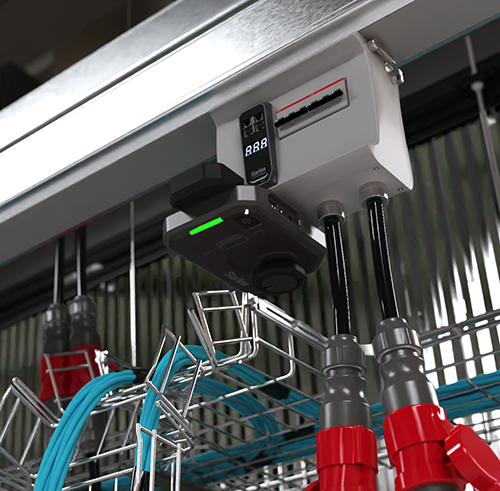
We’ve also developed a new technology, the Remote Plug-In Actuator (RPA), to further mitigate the risk of live insertion. The RPA allows technicians to remotely activate tap-off units from a distance. So, whenever a user adds or removes a circuit, the RPA allows you to remain outside the arc flash boundary, which makes it extremely safe.
How do you expect to see safety measures within data centres take shape moving forward?
With AI trends, there’s going to be no slowdown in terms of rising power densities. Power is going to increase for at least another five years, maybe more – and it’s increasing exponentially from what we’re seeing in rack power.
I expect data centres and the overall market to take arc flash and hazards more seriously. Previously, we were dealing with incident energies or arc flash energies that were relatively low. But with this rising power, we expect that baseline to continue to increase.
Educating both the organisation and its employees to manage, mitigate and safeguard against risk is going to be paramount.
I also predict new technologies will continue to emerge in the next two to five years because power and voltages in the AC world will continue trending higher. There’s discussion around transitioning to DC, which can result even higher incident energy.
I expect that the market and organisations will respond positively to new technologies to mitigate some of the risks involved with the increase in power.
If you’re interested in finding out more, contact your local Starline representative: https://starlinepower.com/find-a-rep

