
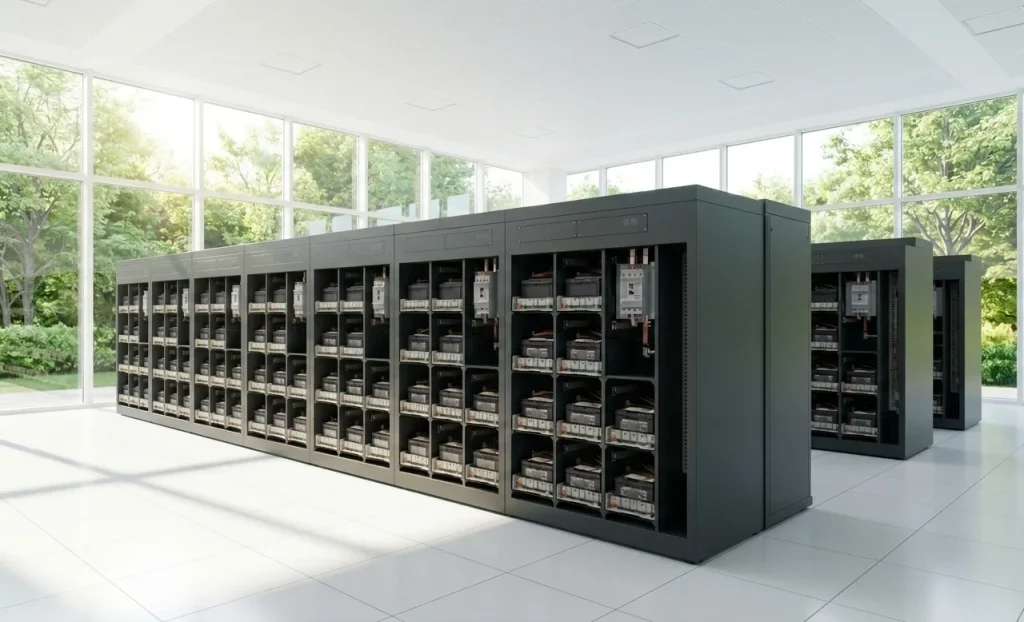
As EU regulations tighten and supply chain risk grows, Brandon Smith, VP of Global Sales and Product at ZincFive, highlights nickel-zinc as a turnkey retrofit alternative to brownfield valve regulated lead-acid (VRLA) deployments, delivering high-power performance, superior safety, longer service life, lower lifecycle emissions and simplified compliance within existing infrastructure.

For European data centre operators approaching VRLA replacement, battery selection is increasingly defined by regulatory, sustainability, supply chain and retrofit constraints within existing physical architectures, including open rack designs, particularly in brownfield environments where most capacity already exists.
Brownfield reality changes the equation
More than 70% of global data centre capacity sits in existing facilities. In Europe, where permitting timelines are extended, grid access is constrained and sustainability targets are tightening, upgrading existing infrastructure has become the primary path forward.
Retrofits offer a clear economic advantage, often reducing project costs by 30–50% while avoiding greenfield delays. However, those advantages depend on solutions that preserve the simplicity of replacement.
Lithium-ion was once the assumed successor to VRLA. Today, that assumption is being tested in brownfield environments.
Despite improved performance and lifespan compared to VRLA, lithium-ion deployments often require enclosure modifications, fire suppression upgrades and extended compliance reviews. What begins as a battery replacement can quickly expand into a broader infrastructure project, increasing cost, risk and time to deployment.
A changing regulatory and supply chain landscape
The EU Battery Regulation (2023/1542) further reinforces this shift, introducing increasingly rigorous requirements around material sourcing, end-of-life management and lifecycle transparency.
By requiring a digital battery passport, which requires carbon footprint and other sustainability metrics to be validated by an accredited third party and placed in the public domain, introduces a new level of transparency and accountability across the supply chain, with compliance responsibility extending to operators and integrators.
Meanwhile, battery supply chains are under increasing scrutiny. Lithium is among the materials most exposed to geopolitical concentration risk and along with lead-based systems face growing pressure around lifecycle performance and evolving sustainability expectations.
These combined pressures are forcing a re-evaluation of what a viable retrofit solution looks like.
A simpler path forward
Nickel-zinc provides a solution aligned to these realities.
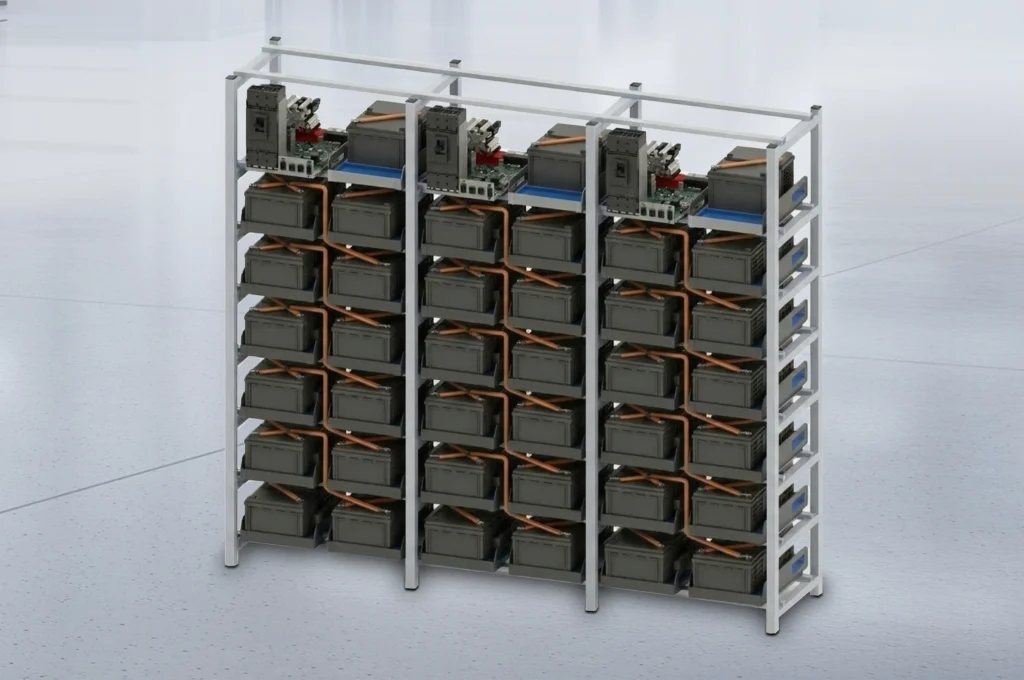
ZincFive’s NiZn Retrofit Kit is designed as a true drop-in replacement for VRLA systems, fitting within existing cabinet and open rack footprints without requiring enclosure changes, room redesigns, or additional fire protection systems.
The NiZn Retrofit Kit uses a turnkey design to fit a wide range of existing configurations while delivering three times the power density of VRLA, enabling a significant performance upgrade without additional infrastructure.
By enabling right-sized backup power, NiZn retrofits allow operators to deploy only the capacity they need, reducing inefficiency and avoiding the hidden costs of oversized lead-acid systems. As an aqueous-based chemistry, nickel-zinc is non-flammable and eliminates thermal runaway risk at the cell level, simplifying compliance efforts and avoiding the cascading infrastructure changes required for lithium-ion systems.
Pre-assembled, modular NiZn battery trays enable fast, repeatable installations, allowing service providers to execute consistently across sites. The result is a turnkey approach that preserves the speed and predictability operators expect from retrofit projects, within the existing footprint.
Performance, sustainability and economics without tradeoffs
Nickel-zinc delivers three times the power density of VRLA, enabling a more compact footprint and, in some cases, the elimination of entire battery string. This improves space utilisation and lowers total cost of ownership (TCO).
ZincFive solutions are designed to meet EU Battery Regulation requirements, including lifecycle transparency and recyclability standards, aligning with both current compliance obligations and future regulatory direction.
Notably, 100% of the nickel and zinc used in ZincFive batteries can be recycled for reuse, supporting circularity while avoiding critical mineral dependencies. Lifecycle analyses demonstrate 25–50% lower greenhouse gas emissions compared to alternative lead and lithium-based chemistry systems.
Lifecycle economics further reinforce the case for nickel-zinc. With a 10-year warranty and up to a 15-year service life, the NiZn Retrofit Kit eliminates the repeated five-to-seven-year replacement cycle associated with VRLA. As labour costs increase across Europe, fewer replacement events also significantly reduce operational expenditure and disruption.
For operators managing aging VRLA infrastructure, the question is not only what replaces lead-acid, but what fits the realities of European deployment.
As regulatory pressure increases and retrofit strategies become central to capacity planning, solutions that minimise complexity while improving performance will define the next phase of infrastructure upgrades. Nickel-zinc enables operators to upgrade chemistry without upgrading infrastructure.

